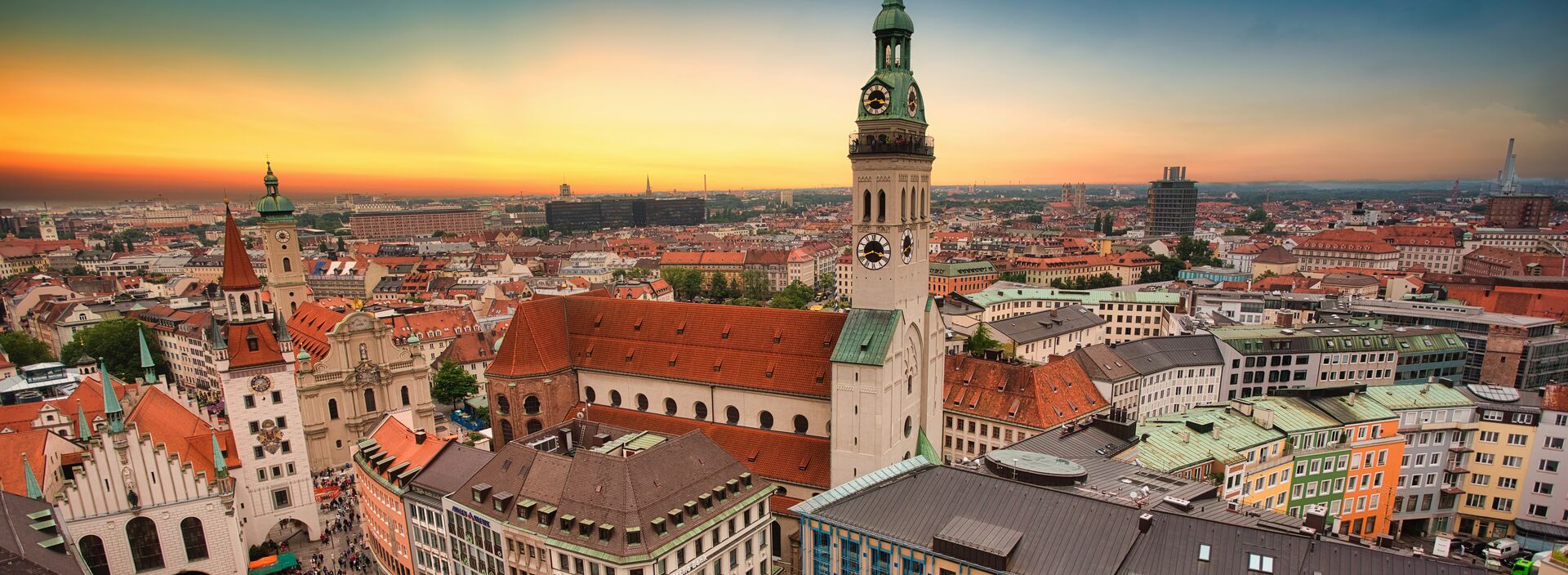
München
0 results found in München.
No upcoming events in this city.
View all eventsAbout München
Munich, the capital of Bavaria, is one of Germany's most important tourist destinations, with its rich historical heritage, world-renowned museums, and vibrant cultural life. The city has a unique structure that blends technology and art with traditional Bavarian hospitality.
Historical Buildings and Architecture
Munich was historically the center of the Duchy and Kingdom of Bavaria, and the magnificent buildings from that period have shaped the city's character.
- Old Town (Altstadt): The heart of the city, Marienplatz square is known for its magnificent town hall (Neues Rathaus) and the famous Glockenspiel (clock tower show).
- Royal Heritage: The Residenz , the former residence of the Bavarian kings , and Nymphenburg Palace , a summer palace famous for its Baroque gardens, are the city's most important historical sites.
- Religious Buildings: St. Peter's Church , the oldest church in the city , and Frauenkirche, with its iconic onion domes, are must-see landmarks.
- Architectural Style: The city boasts some of the finest examples of Baroque and Gothic architecture. The 17th-century Theatinerkirche is an impressive building reflecting Italian Baroque influences.
Tourist Attractions and Museums
Munich is home to such rich collections that it is known as the "city of museums":
- Deutsches Museum: The world's largest science and technology museum, it welcomes millions of visitors every year.
- Art Complexes: The Pinakothek Museums (Alte, Neue and Pinakothek der Moderne), exhibiting classical and modern art , are popular destinations for art lovers.
- Passion for Cars: In the city that hosts BMW's headquarters, the futuristic BMW Museum and BMW Welt are must-sees for technology enthusiasts.
- Outdoor Spaces: The English Garden (Englischer Garten), one of the world's largest city parks , is famous for the Eisbach canal where river surfing is possible.
Cultural Structure and Life
Munich culture combines the traditional Bavarian lifestyle with a modern, cosmopolitan structure:
- Oktoberfest: The world's largest beer festival, bringing together millions of people every year, is the city's most powerful cultural symbol.
- Food and Drink Culture: To experience the daily life of the city, the Viktualienmarkt, an open-air market operating since the 19th century, is an ideal spot. Here you can find everything from local cheeses to handcrafted goods.
- Beer Gardens (Biergarten): Traditional beer gardens under chestnut trees are an integral part of Munich's social life.
In Munich, you can easily reach any point in the city using the MVV (Münchner Verkehrs- und Tarifverbund) system, which includes metro, tram, and bus networks